
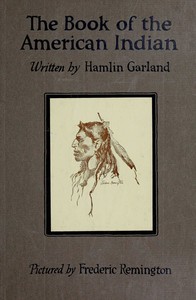
The book of the American Indian by Hamlin Garland
Hamlin Garland’s The Book of the American Indian isn’t a single, linear novel. Think of it more as a series of vivid snapshots, a collection of stories and sketches gathered from his travels and research in the American West during a time of massive upheaval. He pulls the camera in close on the daily lives, struggles, and spirit of various Native American nations as their world is fundamentally altered.
The Story
The book doesn't follow one plot, but a common thread ties it together: the end of a way of life. Garland shows us scenes of treaty negotiations that feel more like forced surrenders, the grim reality of life on newly established reservations, and the internal conflicts within tribes about how to respond—whether to fight, to try and adapt, or to quietly resist. We see the arrival of railroads, settlers, and soldiers not as abstract historical events, but as personal disasters for the people whose homes are in the way. Through characters like a weary chief trying to protect his people from starvation or a young man torn between tradition and a changing world, Garland builds a mosaic of a culture under immense pressure.
Why You Should Read It
What struck me most was Garland’s approach. Writing in the early 1900s, he was ahead of his time in trying to present Native American perspectives with empathy and respect. He doesn’t romanticize or villainize. He simply shows the human cost of America’s westward march. The power here is in the details—the description of a forced march, the quiet pride in a fading ceremony, the frustration of dealing with broken promises. It makes history feel immediate and personal. You’re not just learning what happened; you’re getting a sense of how it felt for those who lived it. It’s a sobering but necessary look at a foundational American experience.
Final Verdict
This book is perfect for readers who love historical nonfiction but want something more intimate than a broad overview. It’s for anyone interested in Native American history, the real story of the American West, or simply in powerful human stories about resilience and change. Be prepared: it’s not a light or easy read. It’s a thoughtful, sometimes heavy, journey into a painful past. But it’s a journey that offers genuine understanding, and that makes it incredibly worthwhile.
This content is free to share and distribute. It serves as a testament to our shared literary heritage.
James Sanchez
1 year agoEssential reading for students of this field.
Kevin Nguyen
1 year agoSolid story.
Jennifer Scott
11 months agoHaving read this twice, it manages to explain difficult concepts in plain English. Definitely a 5-star read.
Mason Johnson
8 months agoWithout a doubt, it provides a comprehensive overview perfect for everyone. A true masterpiece.






Amanda Martinez
1 year agoHaving read this twice, it manages to explain difficult concepts in plain English. Absolutely essential reading.