
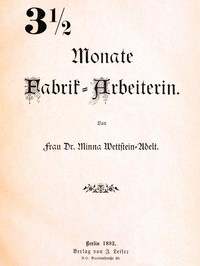
3½ Monate Fabrik-Arbeiterin by Minna Wettstein-Adelt
In 1898, journalist Minna Wettstein-Adelt decided to find out for herself what life was really like for the women powering Germany's booming industries. She left her identity behind and got a job as a common laborer in a textile factory. 3½ Monate Fabrik-Arbeiterin is the diary she kept during those months.
The Story
The book follows Minna's day-to-day struggle. We experience the pre-dawn wake-ups, the relentless monotony of the machinery, and the physical toll the work takes on her body. She describes the factory floor—deafeningly loud, dusty, and dangerous. The narrative isn't just about work; it's about survival. She details the miserable living conditions in the company barracks, the terrible food she could barely afford, and the constant scrutiny from foremen. We meet her co-workers: young women worn down by exhaustion, yet still finding ways to laugh and support each other. The central tension isn't a traditional plot, but Minna's own internal conflict—her growing fury at the system's exploitation, contrasted with her need to keep her cover and truly live the experience.
Why You Should Read It
This book grabs you because it's so personal. You're not reading statistics about wages and hours; you're feeling the ache in Minna's back and the gnawing in her stomach. Her voice is sharp, observant, and often angry. She doesn't romanticize poverty or worker solidarity; she shows the grinding reality that leaves little room for anything but fatigue. What struck me most was how contemporary her criticisms feel. She writes about unfair wages, unsafe workplaces, and the dehumanizing treatment of employees—issues that are still headline news today. Her perspective as a women's rights activist adds another layer, as she specifically highlights how these conditions impact women.
Final Verdict
This is a must-read for anyone interested in social history, labor rights, or pioneering journalism. It's perfect for readers who enjoyed Barbara Ehrenreich's Nickel and Dimed and want to see a classic example of undercover reporting. While it's a historical document, it reads with the urgency of a modern exposé. Be prepared for a sobering, eye-opening journey into a world that built our modern one, told by a woman who was brave enough to live it and talented enough to make us feel like we were right there with her.
This text is dedicated to the public domain. Use this text in your own projects freely.
Dorothy Johnson
1 year agoA must-have for anyone studying this subject.







Brian Walker
10 months agoHaving read this twice, the plot twists are genuinely surprising. Don't hesitate to start reading.