
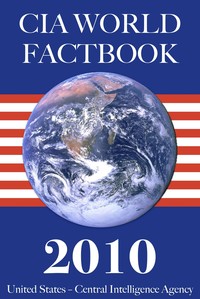
The 2010 CIA World Factbook by United States. Central Intelligence Agency
Let's be clear from the start: this is not a book you read cover-to-cover like a novel. The 2010 CIA World Factbook is a reference work, a massive compilation of data on 267 world entities. It has no characters, no plot, and no narrative arc in the traditional sense. Its structure is its story. Each country gets a standardized entry, breaking down its geography, people, government, economy, communications, and military.
The Story
The 'story' is the state of the world in 2010. You open to Afghanistan and get a cold, factual rundown of its terrain, ethnic groups, GDP breakdown, and infrastructure. You turn to Belgium and get the same template filled with entirely different numbers. Page by page, country by country, a global portrait emerges. You see the aftermath of the 2008 financial crisis in debt figures, the rise of mobile phones in Africa in communication stats, and demographic time bombs in aging population pyramids. The book itself is silent, but the data screams with context about global inequality, resource distribution, and political stability.
Why You Should Read It
I keep this book on my shelf not for bedtime reading, but for perspective. In an age of opinion and misinformation, there's something refreshing about its blunt, just-the-facts style. Need to settle a bet about Brazil's major exports? It's in here. Writing a story set in Mongolia and need to know the climate? Check the Factbook. It turns vague notions about 'poor' or 'rich' countries into specific, comparable details. Browsing it makes you a more informed citizen of the world. You start connecting dots—seeing how a lack of arable land might drive political tension, or how a young population impacts a nation's future. It’s a toolkit for understanding the news.
Final Verdict
This book is perfect for trivia lovers, students, writers, travelers, and news junkies who crave primary source material. It's for the person who hears a news report about Taiwan and immediately wants to know its GDP per capita compared to its neighbors. It is decidedly not for someone seeking a flowing narrative or casual entertainment. Think of it as the ultimate almanac on steroids, compiled by one of the world's most resourceful intelligence agencies. If you have a curious mind and appreciate data, dipping into this factbook is a uniquely grounding and enlightening experience. Just don't try to carry it on vacation—it's a doorstop of knowledge.
The copyright for this book has expired, making it public property. Distribute this work to help spread literacy.
Andrew Wright
5 months agoEssential reading for students of this field.







Jennifer King
1 year agoI started reading out of curiosity and the flow of the text seems very fluid. A true masterpiece.