
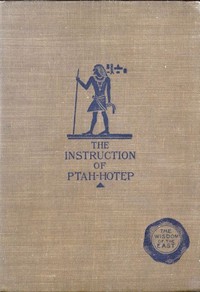
The Instruction of Ptah-Hotep and the Instruction of Ke'Gemni by Ptahhotep et al.
So, what's this ancient Egyptian book actually about? Let's break it down.
The Story
There's no traditional plot here. Think of it as a manual. Ptahhotep, an elderly vizier (a top advisor to the pharaoh) in the Old Kingdom, feels his age. He asks the king for permission to retire and pass his position to his son. But first, he wants to impart everything he's learned about life, leadership, and integrity. The king agrees, and what follows is Ptahhotep's 'instruction'—a series of maxims and advice. He covers everything from table manners and listening skills to the heavy stuff: managing subordinates justly, avoiding greed, and cultivating self-control. The companion text, by Ke'Gemni, offers similar guidance, focusing on conduct and social harmony. The 'story' is the journey of applying this wisdom across a lifetime.
Why You Should Read It
I picked this up expecting a historical curiosity, but I was hooked by how relevant it felt. This isn't abstract philosophy; it's street-smart advice for navigating office politics, family disputes, and your own ego—just set in ancient Memphis. Lines about 'not gossiping' or 'listening patiently to a petitioner' hit differently when you realize humans have been struggling with the same social flaws for millennia. What struck me most was the emphasis on humility and quiet competence over boastful arrogance. In our world of loud self-promotion, Ptahhotep's call to 'be skillful in speech, so you may be strong' is a powerful, quiet alternative. It makes you slow down and question your own daily interactions.
Final Verdict
This book is perfect for anyone tired of modern self-help buzzwords and wants to get back to the fundamentals. It's for history lovers, of course, but also for thinkers, leaders, teachers, or anyone who enjoys a good, quiet conversation with a very wise, very old mind. It's short, so there's no commitment—you can dip in and out. Don't go in looking for a thrilling narrative. Go in looking for a mirror, one that reflects a version of yourself from 4,000 years ago, still trying to figure it all out. You might be surprised what you learn.
This masterpiece is free from copyright limitations. You are welcome to share this with anyone.
Michelle Sanchez
6 months agoHelped me clear up some confusion on the topic.







Sandra Nguyen
8 months agoI came across this while browsing and the clarity of the writing makes this accessible. Worth every second.